

Did you know that we shed millions of skin cells every night? These cells feed dust mites in our mattresses. Keeping our sleeping areas clean is key for our health. A weekly cleaning routine helps keep our sleep space hygienic.
Many people wonder about the best laundry settings. Knowing what temperature to wash bed sheets is important. It keeps fabrics in good shape while getting rid of allergens. The right heat setting also prevents delicate fibers from wearing out too soon.
This guide looks into the science of water settings and textile care. By following these professional recommendations, your linens will stay fresh and comfy for years. Let’s explore the best practices for your home.
Key Takeaways
- Weekly cleaning cycles are essential for a healthy bedroom.
- High heat effectively kills dust mites and bacteria.
- Always check care labels to prevent fabric damage.
- Cold water saves energy and protects synthetic blends.
- Proper drying techniques prevent wrinkles and mildew growth.
Understanding the Importance of Water Temperature for Bedding
Your bedding collects skin cells, sweat, and oils, making it key to control temperature for a clean home. Many wonder, what temperature should i wash bed sheets to keep them clean and not damage them? The right temperature is the key to a fresh sleep space.
Why Temperature Matters for Hygiene
Washing your sheets once a week is best for a clean bed. In just a week, they pick up tiny particles that can cause allergies or skin problems. The right heat setting is important to get rid of these threats.
Choosing the right wash settings has many hygiene benefits:
- Eliminating allergens: Higher temperatures kill dust mites better.
- Removing body oils: Warm water breaks down oils that stick to fabrics.
- Sanitizing surfaces: The right heat reduces bacteria after illness.
The Impact of Heat on Fabric Longevity
Heat is great for cleaning but can harm delicate fabrics. Using too hot water can weaken fibers, causing them to thin and wear out faster. Knowing what temperature should i wash bed sheets is key to keeping them in good shape.
The table below shows how different temperatures affect your bedding:
| Temperature | Best For | Fabric Impact |
|---|---|---|
| Cold | Delicates/Silk | Preserves color and texture |
| Warm | Cotton/Blends | Balanced cleaning power |
| Hot | Whites/Linens | Deep sanitization but risks shrinkage |
Choose a setting that cleans well but keeps fabrics soft. Adjusting for the material ensures your sheets stay comfy for years. Consistency in your routine keeps both hygiene and fabric quality high.
Determining What Temperature to Wash Bed Sheets Based on Material
Every fabric needs a special care when you choose what temperature to wash bed sheets. Different materials react differently to heat. Knowing what your bedding needs is key to keeping it in good shape.
Using the wrong setting can cause your sheets to wear out faster, fade, or even get damaged. It’s important to pick the right temperature for your favorite bedding.
Cotton and Linen Sheets
Cotton and linen are loved for their breathability and comfort. But, they can shrink a lot when washed in hot water. To keep your sheets fitting right, use warm or cool water.
If your sheets are really dirty, you might want to use hot water. But, here are some tips to keep your linens looking great:
- Always check the manufacturer’s care tag for specific heat limits.
- Use a gentle cycle to reduce friction on the fibers.
- Opt for a cool rinse to help prevent wrinkles from setting in.
Synthetic Blends and Microfiber
Synthetic materials like polyester blends and microfiber are tough. They usually do well with warm water, which helps get rid of body oils and dirt. For what temperature to wash bed sheets made of synthetics, warm water is best for a deep clean.
Don’t use very hot water on these materials. It can damage the synthetic fibers over time. High heat can make the fabric lose its softness or get a rough, pilled look. Keeping the temperature moderate helps your sheets stay soft and comfy for a long time.
Silk and Delicate Fabrics
Silk and other delicate materials need extra care. They are sensitive to heat and can become brittle or lose their shine if washed in warm or hot water. Always use cold water to protect the fabric.
Gentle care is the key to keeping silk bedding luxurious. Low water temperature helps prevent the fibers from weakening during washing. Use a mild detergent made for delicate items for the best results.
Step by Step Guide to Preparing Your Sheets for the Wash
Starting with good laundry habits is key. Taking a few extra minutes to organize your linens makes them stay soft, clean, and durable. By sticking to a routine, you protect your bedding and keep it in top condition.
Checking Care Labels for Manufacturer Recommendations
Always check the care labels on your bedding first. These tags tell you the manufacturer requirements for your fabric. Not following these can cause your sheets to shrink or get damaged.
The label will say the best temperature for washing bed sheets. If the tag is missing, use a gentle cycle with cool or lukewarm water. This keeps your sheets looking good.
Pre-treating Stains and Body Oils
Bed sheets often get body oils and sweat that need extra care. Use a mild stain remover or a bit of detergent on these spots. Gently rubbing the fabric helps the cleaner get deep into the fibers.
Let the treatment sit for about ten minutes before washing. This makes sure your temperature for washing bed sheets works well to remove tough stains. Treating stains early stops them from setting in during drying.
Sorting Sheets by Color and Fabric Type
Sorting your laundry is key to avoid dye transfer and damage. Keep light-colored sheets separate from dark ones to keep them bright. Also, don’t wash heavy items like towels with delicate sheets, as it can cause pilling.
Organizing by fabric type lets you choose the right settings for each batch. Use the table below to organize your laundry day well:
| Category | Sorting Method | Preparation Tip |
|---|---|---|
| Light Colors | Separate from darks | Check for stains first |
| Delicate Fabrics | Wash in mesh bags | Use low spin speed |
| Heavy Blends | Group by weight | Adjust water level |
| General Linens | Sort by material | Verify wash temperature |
Selecting the Right Cycle and Temperature Settings
Getting the right cycle and temperature is key to keeping your bedding fresh. Finding the perfect temperature to wash bed sheets balances cleanliness and fabric longevity. Adjusting your machine settings helps protect delicate fibers while removing daily dirt.
Cold Water Washing Benefits
Cold water is often the best choice for weekly laundry. It’s energy-efficient and gentle on fabrics. Cold water prevents shrinkage, color fading, and fiber damage.
- Reduces your monthly utility costs.
- Protects the integrity of elastic fitted sheets.
- Prevents bright colors from bleeding into white fabrics.
Warm Water for Deep Cleaning
Warm water is great for when your sheets need extra care. It removes body oils and sweat that cold water might miss. This setting is perfect for cotton blends that need a deep clean without harsh heat.
Many modern detergents work best in warm water. This makes your bedding feel fresh and clean. It’s a safe way to keep your linens hygienic without damaging them.
Hot Water for Sanitization
Hot water is needed for maximum cleanliness at times. It’s the best way to sanitize bedding after someone has been sick. It kills off tough bacteria and allergens that thrive in cooler temperatures.
But use hot water sparingly to avoid wear and tear. Always check your care labels first. High heat can harm synthetic materials or delicate weaves. When used right, hot water gives your linens a deep clean.
Special Considerations for White Bed Sheets
Keeping your white bed sheets looking crisp is all about the wash. A careful approach is key to avoid dullness. Follow a few simple rules to keep your bedding bright and soft for years.
Maintaining Brightness Without Harsh Chemicals
Many turn to chlorine bleach for whites, but it’s extremely harsh. It weakens fabric and can irritate sensitive skin. Instead, try oxygen-based whiteners or natural options like baking soda or white vinegar.
These gentler options lift stains and brighten without bleach’s damage. Adding baking soda to your wash cycle can neutralize odors and boost detergent power. This simple change keeps your sheets luxurious and fresh.
When to Use Hot Water for Whites
Wondering what temperature to wash white bed sheets? Hot water is best for deep cleaning. It breaks down oils and sweat that make whites look dingy. But always check the care label to ensure the material can handle the heat.
Hot water is great for sanitizing bedding after illness. It provides a thorough clean but use it sparingly to avoid fiber breakdown. For regular care, a warm setting is usually enough to keep whites looking great.
Avoiding Yellowing and Graying
Yellowing and graying come from mineral buildup or bad rinsing. Never overload your washing machine to ensure proper water and detergent flow. Use the right amount of detergent to avoid residue that attracts dirt.
If you’re wondering about preventing discoloration, remember consistent rinsing is key. The table below helps choose the right whitening strategy for your laundry.
| Whitening Method | Best For | Fabric Safety | Effectiveness |
|---|---|---|---|
| Oxygen Bleach | General Brightening | High | Excellent |
| Baking Soda | Odor Removal | Very High | Moderate |
| White Vinegar | Softening/Residue | High | Moderate |
| Chlorine Bleach | Heavy Stains | Low | High |
Managing Allergens and Bacteria Through Temperature Control
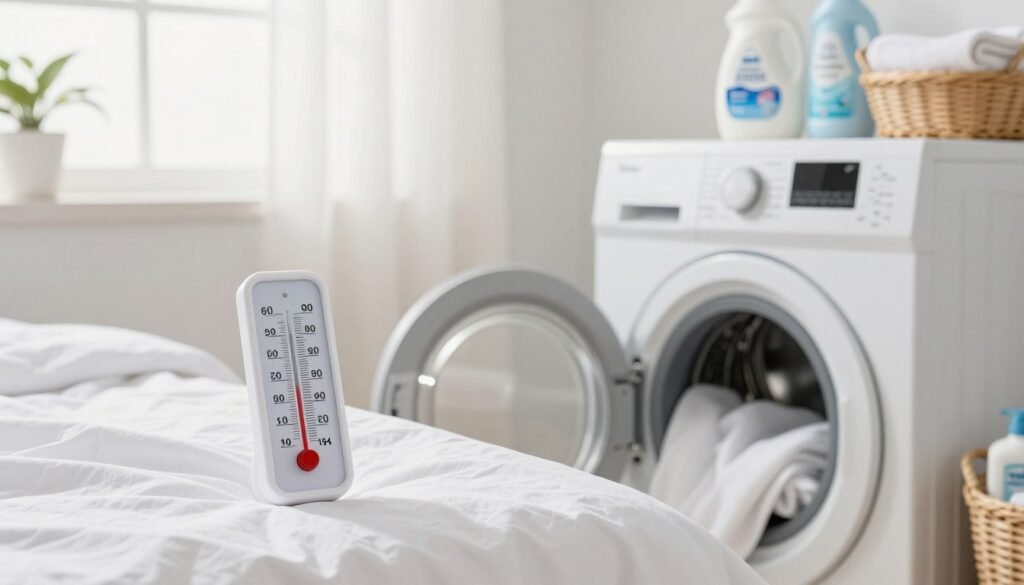
Temperature control is key for deep cleaning your bedding. Many ask what temperature should you wash bed sheets for a healthy sleep space. Cold water is good for daily use, but hot water kills dust mites and bacteria.
Eliminating Dust Mites Effectively
Dust mites love warm, humid places like your mattress and bedding. To kill them, wash your sheets at 130°F (54°C). Washing in cold water won’t get rid of them because they’re tough to kill at lower temperatures.
For allergy sufferers, wash your sheets in hot water every two weeks. This keeps mite numbers down, making it easier to breathe at night.
Sanitizing Sheets After Illness
When someone gets sick, your bedding can spread germs. Knowing what temperature should you wash bed sheets is key to stop viruses. Wash them in the hottest water allowed by the fabric label.
High heat kills bacteria and viruses, making your bed safe again. Always check the fabric care label to avoid damage.
Balancing Hygiene with Fabric Care
High heat is great for cleaning but can harm delicate fabrics. You need to balance cleaning with fabric care. If you’re concerned about what temperature should you wash bed sheets for durability, mix warm and hot cycles.
Regular maintenance with warm water keeps sheets fresh. Hot washes occasionally provide the deep clean needed for hygiene. This way, you protect your investment and keep your sleep space clean.
Common Mistakes to Avoid When Washing Bedding
Even with good intentions, your laundry routine might harm your favorite linens. Choosing the right bed sheets wash temperature is key. But other habits can undo your efforts. Knowing these mistakes helps keep your bedding soft and long-lasting.
Overloading the Washing Machine
It’s tempting to fill the washer to save time. But, too many items block proper agitation. This is needed to clean dirt and oils well.
Too full, sheets get tangled and twisted. This stops water from being wrung out properly. This leads to excessive wrinkling and poor cleaning.
Using Excessive Detergent
Many think more soap means cleaner sheets. But, too much detergent leaves a sticky residue. This traps bacteria and makes sheets stiff or scratchy.
Always follow the detergent’s guidelines. This ensures your bed sheets wash temperature and soap amount work together well.
“Cleanliness is not just about the soap you use, but how well you rinse the fabric to maintain its natural integrity.”
Ignoring Water Hardness Levels
Water hardness affects your laundry. Hard water has calcium and magnesium, which can hinder cleaning.
In hard water areas, sheets may look dull or gray. You might need a water softener or adjust your bed sheets wash temperature. This helps detergent dissolve and rinse away minerals.
Drying Techniques to Complement Your Washing Routine
Many think the work stops at the washer, but drying is just as key. Even if you know the best washing bed sheets temperature, bad drying can ruin your efforts. High heat can damage fabrics, cause pilling, and shrink them.
Air Drying vs. Machine Drying
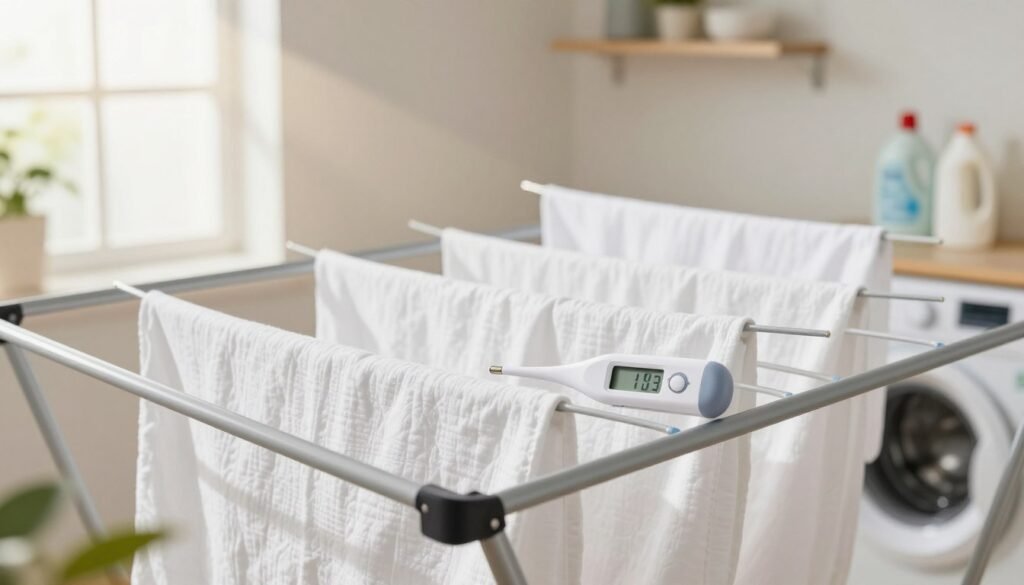
Air drying is the gentlest method for keeping bedding intact. Hanging sheets outside or on a rack avoids heat damage. It also keeps fibers soft and prevents static cling from machine drying.
For those who prefer machine drying, you can get good results with the right steps. Avoid over-drying to prevent fabric from feeling brittle. Take sheets out while they’re slightly damp to reduce wrinkles and make folding easier.
Choosing the Right Heat Setting for Your Dryer
Always choose low heat when using a dryer to protect your bedding. Tumble drying on low reduces shrinkage and fabric wear. This keeps your linens soft and comfortable for longer.
Don’t use high heat to dry faster, as it can damage fibers early. Remember, the dryer is where most heat damage happens. Use the delicate or low-heat cycle to keep your bedding in top condition.
Conclusion
Creating a habit for cleaning your linens makes your sleep space a sanctuary. You now know how to keep your bedding from brands like Brooklinen or Parachute in top shape.
But, you might wonder what temperature is best for washing bed sheets. The answer varies based on fabric type and your hygiene needs. Using the right temperature keeps your sheets soft and long-lasting.
Small changes in laundry can greatly improve your sleep. Proper care prevents wear and keeps your bedroom fresh. If unsure about the best temperature, always check the fabric tag.
Take time this weekend to review your laundry habits. Share your best tips for keeping sheets fresh with friends or family. Your bedding needs the best care for a refreshing morning every day.