
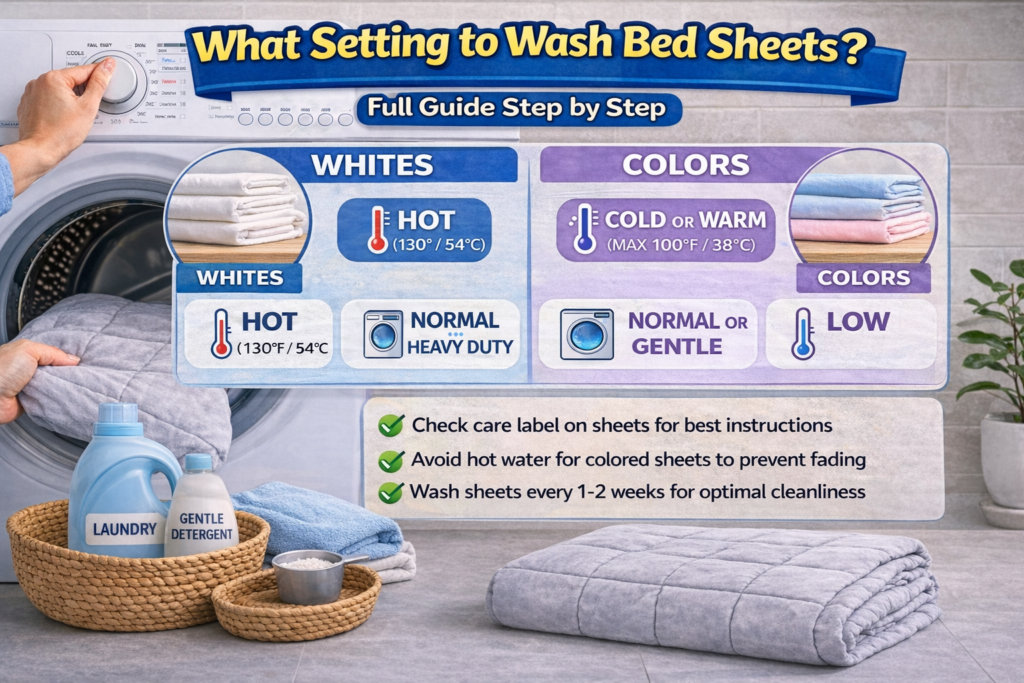
Ever thought your laundry routine might harm your favorite linens? Many just throw their bedding in the washer without thinking. Then, they notice the fabric gets worn out or loses softness too fast.
Knowing what setting to wash bed sheets right is key to keeping them fresh and comfy. The right care does more than clean them. It keeps the fabric good for years of sleep.
Choosing the right setting to wash bed sheets keeps them looking new. By following these tips, you can make your linens last longer. They’ll stay clean and welcoming.
Key Takeaways
- Always check the care label for specific manufacturer instructions.
- Use a gentle cycle to prevent unnecessary wear on delicate fabrics.
- Select cool or warm water temperatures to avoid shrinking or fiber damage.
- Avoid overloading the machine to ensure a thorough cleaning process.
- Wash your linens at least once every two weeks for optimal hygiene.
- Use mild detergents to protect the natural texture of your bedding.
The Importance of Proper Bed Sheet Maintenance
Buying high-quality sheets is just the start to a great bedroom. To keep them feeling luxurious, you need a regular care routine. Knowing what setting to wash bed sheets on is key. It helps avoid early wear and tear.
Extending the lifespan of your bedding
Washing your sheets puts stress on the fabric from agitation and heat. The right settings reduce friction that causes pilling and thinning. Proper maintenance keeps your sheets soft and long-lasting for years.
Here are some easy habits to keep your sheets in top shape:
- Always check the care label before starting a cycle.
- Use a gentle detergent to avoid harsh chemical buildup.
- Avoid overloading the machine to allow the fabric to move freely.
Health benefits of regular washing
Your bed attracts dead skin cells, body oils, and dust mites. If you skip laundry, these can cause skin irritation or allergies. A regular routine keeps your sleeping area hygienic every night.
Regular cleaning is more than looks; it’s essential for health. Knowing what setting to wash bed sheets on helps remove bacteria and allergens. This simple care step improves sleep and health.
Determining What Setting to Wash Bed Sheets Based on Fabric
Knowing your bedding material is key to a cleaner sleep space. Different fabrics react differently to heat and agitation. So, it’s important to know what setting do you wash bed sheets on to keep them in good shape. The wrong setting can cause wear, fading, or shrinking.
Cotton and linen requirements
Natural fibers like cotton and linen are tough but need gentle care. Use a cool or warm water cycle to prevent damage. Choose a gentle spin speed to avoid wrinkles and keep the fabric soft.
Synthetic and microfiber considerations
Synthetic materials, like polyester or microfiber, need special washing bed sheets settings. They trap oils and dirt, so warm water is best for cleaning. Don’t use high heat, as it can harm the fibers and make them lose their smoothness.
Silk and delicate fabric care
Silk and other delicate fabrics need extra care to avoid damage. Always use cold water and a mild detergent. If your machine has a delicate or hand-wash cycle, use it to keep your bedding soft and luxurious.
| Fabric Type | Water Temperature | Cycle Type |
|---|---|---|
| Cotton/Linen | Cool/Warm | Normal/Gentle |
| Microfiber | Warm | Synthetic/Permanent Press |
| Silk/Satin | Cold | Delicate/Hand Wash |
By following these tips, you can be sure about what setting do you wash bed sheets on for every load. Proper care helps your bedding stay comfortable for years.
Step-by-Step Preparation for the Wash
Spending a few minutes to get your linens ready is key. It protects your investment and boosts cleaning results. A well-prepared cycle makes your bedding feel fresh and clean. By adopting simple habits, your bed sheets wash setting will work better.
Sorting sheets by color and weight
Always separate laundry by color to avoid dye transfer. Mixing darks with lights can dull your fabrics over time. It’s best to wash white sheets separately to keep them bright.
Also, consider the weight of your items. Heavy items like towels can damage delicate sheets. Wash your sheets with similar lightweight items to prevent damage.
Checking for stains and pre-treating
Before washing, check your sheets for stains or spills. Catching stains early is key, as dryer heat can set them. Use a gentle stain remover or a bit of liquid detergent on the stain.
Gently rub the cleaner into the fabric. Let it sit for about ten minutes before washing. This step helps your bed sheets wash setting clean better without fighting stains.
Properly loading the washing machine
Don’t overfill your machine. Sheets need room to move for even washing. Loose loading ensures better rinsing and prevents tangling.
Put items in the machine one by one. This helps the machine balance the load for an even wash. Use the table below to keep your laundry routine organized and efficient.
| Preparation Step | Action Required | Benefit |
|---|---|---|
| Sorting | Separate by color and weight | Prevents damage and discoloration |
| Stain Check | Pre-treat spots immediately | Ensures complete stain removal |
| Loading | Add items loosely | Improves water and soap circulation |
Selecting the Right Washing Machine Cycle and Temperature
Many homeowners wonder what setting do you wash bed sheets on to keep them soft and clean. It’s important to find a balance between cleaning and preserving the fabric. Choosing the right cycle and temperature helps your bedding stay new for years.
Understanding the Normal vs. Delicate cycle
The Normal cycle is great for standard cotton or linen sheets. It cleans well without damaging the fabric. But, if your sheets are silk, satin, or have fancy designs, go for the Delicate cycle.
A gentle cycle is best to avoid fraying or pilling. Always check the care label for the bed sheets washing machine setting. If unsure, a gentle cycle is safer.
Why water temperature matters for hygiene
Water temperature is key for cleaning your linens. Hot water kills bacteria and dust mites but can shrink cotton. Warm water is usually the best choice for a balance between cleanliness and fabric safety.
For illness or allergies, hot water might be needed. But for regular washing, warm or cool water is better to prevent fading. Consistency is key for keeping your sheets in good condition.
Choosing the correct spin speed
The spin speed affects how wet your sheets will be after washing. A high spin speed dries faster but can cause wrinkles and stress fibers. We suggest a medium spin speed for the best balance.
Lowering the spin speed reduces wrinkles. This makes drying easier and helps your bedding last longer. Avoid the highest spin settings to protect your fabric.
Specific Settings for LG Washing Machines
If you own an LG appliance, you have access to special features for bulky items like sheets. These machines use modern technology for a deep clean without harming your fabrics. Knowing the right bed sheets washer settings is key to a more efficient laundry routine.
Using the Bedding cycle on LG models
The Bedding cycle is made for large, heavy items without upsetting the machine’s balance. It has a special agitation pattern to prevent your linens from tangling. By choosing this mode, you make sure water and detergent reach every part of the fabric.
“Efficiency is doing things right; effectiveness is doing the right things.”
Adjusting settings for TurboWash technology
Many LG models have TurboWash, which saves time without losing cleaning power. When washing your linens, it uses strong spray jets for quick soaking. This is a smart way to keep your bed sheets washer settings while cutting down cycle time.
Customizing wash time and soil level
You can tweak your results by adjusting the soil level and spin speed on your control panel. For a basic clean, a medium soil level works well to remove daily dirt. When wondering what setting to wash bed sheets lg washing machine users should use, remember the load’s weight. A lower spin speed is best for delicate linens to avoid wrinkles and fabric stress.
Best Practices for Drying Your Bed Sheets
After your laundry cycle ends, how you dry your bedding is key to its comfort. Many focus on the bed sheets wash setting, but drying is just as important. Wrong heat can damage fibers or fade colors too soon.

Choosing the right heat setting
High heat can harm soft, durable linens. We suggest using a low heat setting to keep fibers intact. This method stops fabric from becoming hard and keeps your bedding’s original feel.
If you’re not sure about your fabric, always check the care label. A gentle cycle helps ensure your bed sheets wash setting efforts aren’t ruined by too much heat.
Avoiding over-drying and wrinkles
Leaving sheets in the dryer too long is a common mistake. It makes fabric stiff and scratchy, with hard-to-remove wrinkles.
To keep your sheets in top shape, follow these tips:
- Take your sheets out of the dryer when they’re slightly damp.
- Shake them out before folding to get rid of creases.
- Hang them up to dry naturally, over a door or rack.
Benefits of air drying versus machine drying
Air drying is best for keeping linens lasting longer. It saves energy and avoids the damage machine tumbling does to fabric threads.
While machine drying is easy, air drying has its own perks:
- Energy Efficiency: It cuts down your electricity use a lot.
- Fabric Health: Air flow prevents heat damage from a high-heat bed sheets wash setting.
- Freshness: Sunlight naturally cleans and leaves sheets smelling fresh.
Handling Stains and Deep Cleaning
Even the most careful sleepers sometimes get stubborn spots on their bedding. Your standard washing bed sheets settings handle everyday dirt. But, some stains need a special touch to keep your sheets looking new.
Natural solutions for stubborn stains
You don’t always need harsh chemicals for tough stains. Many household items can work wonders on stains before you wash.
- Dish soap: Great for breaking down body oils and food stains.
- Baking soda: A gentle scrubber that lifts odors and light stains.
- White vinegar: Perfect for getting rid of smells and softening fibers.
- Oxygenated bleach: A safer bleach that brightens whites without harming threads.
When to use bleach or sanitizing additives
For extra cleaning power, you might need bleach after an illness or long storage. But, use chlorine bleach only on white cotton sheets to avoid color loss.
For those concerned about fabric safety, try a color-safe sanitizing additive. These products kill germs without harming your washing bed sheets settings.
Deep cleaning for allergen removal
Deep cleaning is key for allergy sufferers. Dust mites and dander hide deep in sheet weaves, even if they look clean.
To get rid of these allergens, wash your bedding in the hottest water allowed. Regular deep cleaning keeps your sleep space healthy and free from allergens all year.
Common Mistakes to Avoid When Washing Sheets
Getting your linens clean isn’t just about the bed sheets washing machine setting. Many people unknowingly shorten their bedding’s life. By changing your laundry habits, you can keep your sheets soft and fresh for years.

Overloading the drum
It’s easy to want to fill the washer to save time. But, overloading the drum stops your sheets from moving well. This can lead to poor cleaning and tough wrinkles that are hard to iron out.
Using too much detergent
More detergent doesn’t mean cleaner sheets. Too much can leave a sticky residue. This residue can trap dirt and make your sheets stiff or scratchy.
Mixing sheets with towels or heavy items
Always wash your bedding alone from towels or heavy items. Towels can cause pilling on your sheets. Also, heavy items take longer to dry, making it hard to find the right bed sheets washer settings. Always prioritize sorting to protect your bedding.
Conclusion
Your bed needs the same care as your favorite clothes. Choosing the right setting to wash bed sheets makes your sleep space clean and cozy.
Sticking to good habits helps your linens last longer. You keep them soft by using the right machine cycles. Brands like Brooklinen or Parachute benefit from this.
Changing your laundry habits a little can make a big difference. Every load is a chance to make your space fresher and your sleep better.
Before you start washing, always check the care labels. Knowing how to wash your bed sheets right makes your bedroom feel like a luxury hotel.
Share your laundry tips with friends or family. Your advice helps them keep their bedding in great condition. It makes home care easier for everyone.