
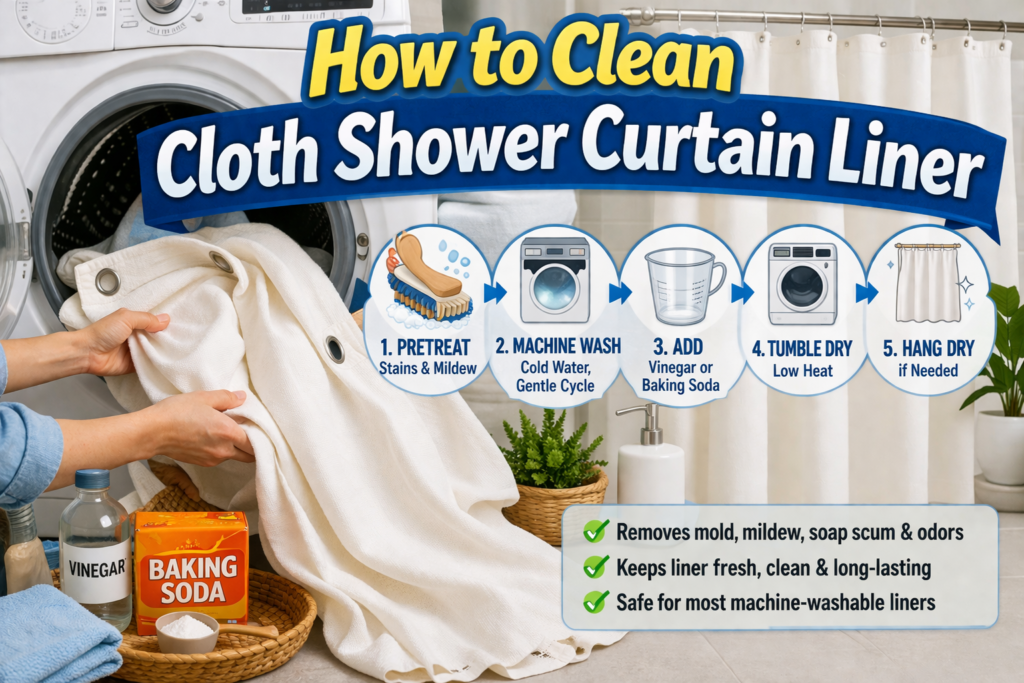
Did you know your bathroom fabric accessories can hold more bacteria than a kitchen sink? Many people ignore these important items. Yet, they are key to keeping you clean every day.
Keeping your bathroom fresh is easier than you think. With a few professional maintenance tips, you can get rid of tough buildup. This way, your favorite bathroom textiles will last longer.
This guide shows you a friendly, complete way to keep your space clean. We’ll guide you through the steps to keep your home a healthy place for your family.
Key Takeaways
- Regular maintenance prevents mold and mildew growth effectively.
- Check care labels before starting any washing process.
- Use mild detergents to protect delicate fabric fibers.
- Proper drying techniques stop odors from returning quickly.
- Consistent care significantly extends the life of your bathroom accessories.
Understanding Your Shower Curtain Material
To learn how to clean a cloth shower curtain, you must know its fibers. Each material reacts differently to water, heat, and cleaners. Knowing your curtain’s type helps avoid damage during cleaning.
Distinguishing Between Fabric and Synthetic Liners
Shower curtains are mainly made of natural or synthetic materials. Cotton or linen blends feel luxurious but absorb a lot of water. This makes them more likely to grow mildew if not dried right.
On the other hand, synthetic liners like polyester or nylon keep water out. They have a tight weave that stops water from passing through. Yet, they need regular cleaning to avoid soap scum buildup.
Why Cloth Liners Require Different Care Than PVC
Cleaning a cloth shower curtain is unlike caring for plastic or PVC ones. PVC liners can be wiped clean with a spray. But cloth curtains need a full wash to get rid of stubborn dirt.
The table below shows the main care differences for various materials:
| Material Type | Cleaning Frequency | Best Cleaning Method |
|---|---|---|
| Cotton/Linen | Every 2-3 weeks | Machine wash, warm cycle |
| Polyester | Monthly | Machine wash, gentle cycle |
| PVC/Vinyl | As needed | Hand wipe with vinegar |
Preparing Your Shower Curtain for Cleaning
Getting your shower curtain ready for cleaning is key. It’s all about organizing your tools and checking the fabric. This makes sure your cleaning goes smoothly and effectively.
Removing the Liner from Hooks and Rings
Start by taking off the liner from the shower rod. Most curtains have easy-to-use rings or hooks. But, some might need a bit more effort. Be careful not to pull too hard, as this can damage the curtain.
- Slide the rings off the rod one by one.
- Lay the curtain flat on a clean surface to inspect it.
- Remove any plastic or metal hardware that cannot be submerged in water.
Checking Care Labels for Manufacturer Recommendations
Always check the care label before cleaning. It tells you the best water temperature and drying method. Not following these can harm your curtain.
If the label is missing or hard to read, go with a gentle cycle and cool water. This is safest for most fabric liners.
Pre-treating Stubborn Stains and Mildew Spots
Deal with dark spots or heavy soap scum before washing. This step is vital for a thorough clean. A mild solution can help remove tough stains.
Use a soft-bristled brush or sponge with water and mild detergent. Focus on the bottom hem for mildew and soap scum. This gets your curtain ready for a deep clean.
The Best Methods for How to Clean Cloth Shower Curtain Liner
Learning how to clean your cloth shower curtain liner is easy. You can use a machine or wash it by hand. Keeping your bathroom textiles clean is key for a fresh home. Follow these steps to keep your curtain looking new.
Machine Washing Your Fabric Liner Safely
Most fabric liners can be machine washed, making it quick and easy. To clean well, balance your wash load with heavy towels. This helps remove soap scum and mildew gently.
Choose a warm, gentle cycle to protect the fabric. Avoid high heat to prevent shrinkage or damage. A delicate cycle is best for how to clean cloth shower curtain liners safely.
Hand Washing Techniques for Delicate Fabrics
For delicate materials, hand washing is safest. Use warm water and a small amount of mild soap. Soak the curtain for about fifteen minutes to loosen grime.
Agitate the fabric gently, focusing on soapy areas. Rinse well with cool water until all suds are gone. This method is great for how to clean cloth shower curtain pieces that need extra care.
Choosing the Right Detergents and Additives
Choosing the right cleaning agents is key. Use mild, human-safe detergents without harsh chemicals or strong fragrances. These products clean well without harming your skin or the environment.
Don’t use bleach, as it can damage the fabric and cause color changes. Add a half-cup of white vinegar to the rinse cycle. It softens the fabric and removes odors. Using these natural additives will keep your bathroom smelling fresh for months.
Removing Mildew and Soap Scum Effectively
Learning how to clean mildew off shower curtain liners is simpler than you might think. You don’t need harsh, toxic chemicals to keep your bathroom clean and bright. Simple household items can give you professional results while keeping your home safe and eco-friendly.
Using Natural Solutions Like Vinegar and Baking Soda
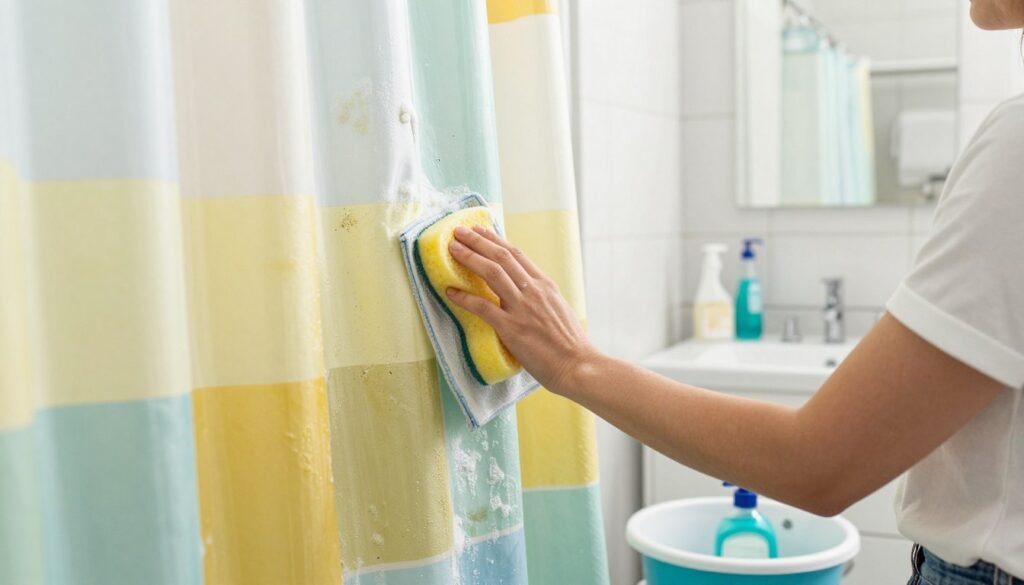
Vinegar and baking soda make a fizzy mix that breaks down soap scum and mildew. This combo is great for regular cleaning and light buildup. To use it, mix baking soda with water to make a paste, apply it, and then spray with white vinegar.
- Apply the baking soda paste to the bottom hem of the liner.
- Spray distilled white vinegar generously over the paste.
- Let the mixture sit for 15 minutes before rinsing thoroughly.
Applying Hydrogen Peroxide for Deep Disinfection
Hydrogen peroxide is a strong sanitizer for fabric. It’s great for killing mold spores deep in the fabric. Always test a small, inconspicuous area first to keep your curtain’s color safe.
“Natural cleaning agents are often more effective and safer for your household than synthetic alternatives found in traditional cleaners.”
Dealing with Persistent Mildew Stains
If basic methods don’t work for mildew stains, it’s time for a stronger treatment. For tough spots, mix one part hydrogen peroxide with two parts water. Use a soft-bristled brush to gently scrub the area and remove the stain without harming the material.
Being consistent is the key to success in managing bathroom moisture. Tackling stains early stops them from becoming permanent. Regular care keeps your shower curtain fresh, clean, and welcoming for a longer time.
Drying and Reinstalling Your Shower Curtain
Keeping your bathroom fresh and mold-free starts with drying your shower curtain right. It might be tempting to rush, but drying it slowly is key. This step helps avoid how to clean mildew off shower curtain worries later on.
Air Drying Versus Machine Drying Considerations
For most fabric liners, air drying is the best choice. Hang your curtain on the rod while it’s damp. This lets it dry naturally, keeping the fabric in good shape and avoiding heat damage from tumble dryers.
If you must use a machine, choose the lowest heat or a delicate cycle. High heat can shrink or damage your liner. Always aim for good air flow to keep things clean.
Preventing Wrinkles and Creases
Don’t leave your curtain bunched up in the washer. Take it out right after the cycle ends to avoid wrinkles. Gently shake it out before hanging to make it smooth.
For tough creases, try a light steam treatment. Hang your curtain in a steamy bathroom after a shower. This method relaxes the fibers and keeps your space looking great.
Proper Reattachment to Shower Rings
Reattaching your hardware is the last step. Make sure each ring is securely attached to the curtain and the rod. A smooth motion means everything is set up right.
Also, clean the rings if they’re dirty. This prevents friction and makes opening your curtain easy. A well-kept setup is key to avoiding moisture problems.
| Drying Method | Best For | Risk Level |
|---|---|---|
| Air Drying | All Fabric Types | Low |
| Low Heat Tumble | Heavy Cotton | Moderate |
| High Heat Tumble | Not Recommended | High |
Maintenance Tips to Keep Your Liner Fresh Longer
Keeping your fabric liner fresh is easy with a regular maintenance routine. By taking care of it regularly, you can avoid deep cleanings and keep your bathroom smelling nice. These simple steps will save you time and money, and keep your shower accessories looking great.
Establishing a Weekly Rinse Routine
Washing your curtain once a week is a smart move. Mix white vinegar and water to create a spray. Spray it on the fabric after your shower. This stops mold from growing and keeps it clean, which is better than cleaning up after mold.
Improving Bathroom Ventilation to Prevent Mold
Moisture is the biggest enemy of your shower liner. Make sure your bathroom has good air flow. Run the exhaust fan for at least twenty minutes after your shower. If you don’t have a fan, keep the bathroom door or window open to let air in.
Good air flow stops mold from growing. It keeps your shower healthy and clean. This simple trick is key to a fresh shower space.
Using Shower Sprays to Minimize Soap Scum Buildup
Soap scum can hold dirt and moisture, leading to bacteria. Daily shower sprays can break down these residues before they harden. This is easier than cleaning up after mold has set in.
Choose gentle, non-toxic sprays that are safe for fabric. A light mist after each shower keeps your liner looking and smelling fresh. Consistency is key to avoiding harsh cleaning later.
Addressing Specific Issues with Clear PVC and Hybrid Liners
Wondering how to clean clear shower curtain materials? You’re not alone. These liners show soap scum and water spots quickly. Without the texture of cloth, every speck of grime is very visible, making your bathroom look messy.
Cleaning Clear PVC Shower Curtain Sections
Keeping a clear PVC shower curtain clean is key. You want to remove buildup without scratching or clouding the surface. Avoid harsh scrubbers or scouring pads, as they can damage the finish.
Use a soft microfiber cloth with warm water and mild dish soap instead. For tough spots, a white vinegar and water solution works well. Always rinse the surface thoroughly with cool water to prevent residue and dust.
Keeping your bathroom clean is more than looks. It’s also about preventing bacteria and mold in moist areas.
Managing Mold on Weighted Hemlines
The bottom edge of your liner is often the most challenging area. Moisture pools in the weighted hemlines, creating a mold breeding ground. This area is hard to clean with standard tools.
To tackle mold, soak the bottom in a diluted bleach solution or mold-killing spray. Use a soft-bristled toothbrush to scrub inside the hem folds. This keeps your clear PVC shower curtain clean and free from mold spots.
| Material Type | Cleaning Frequency | Best Cleaning Agent |
|---|---|---|
| Clear PVC | Weekly | Vinegar & Water |
| Fabric Hybrid | Bi-weekly | Mild Detergent |
| Weighted Hem | Monthly | Bleach Solution |
Common Mistakes to Avoid When Cleaning Fabric Liners
Learning how to clean cloth shower curtain liners right is key. Avoiding common mistakes keeps your bathroom fresh. The wrong cleaning methods can damage your curtain early or permanently. By avoiding these errors, your curtain will last longer.
Avoiding Harsh Chemicals That Damage Fabric Fibers
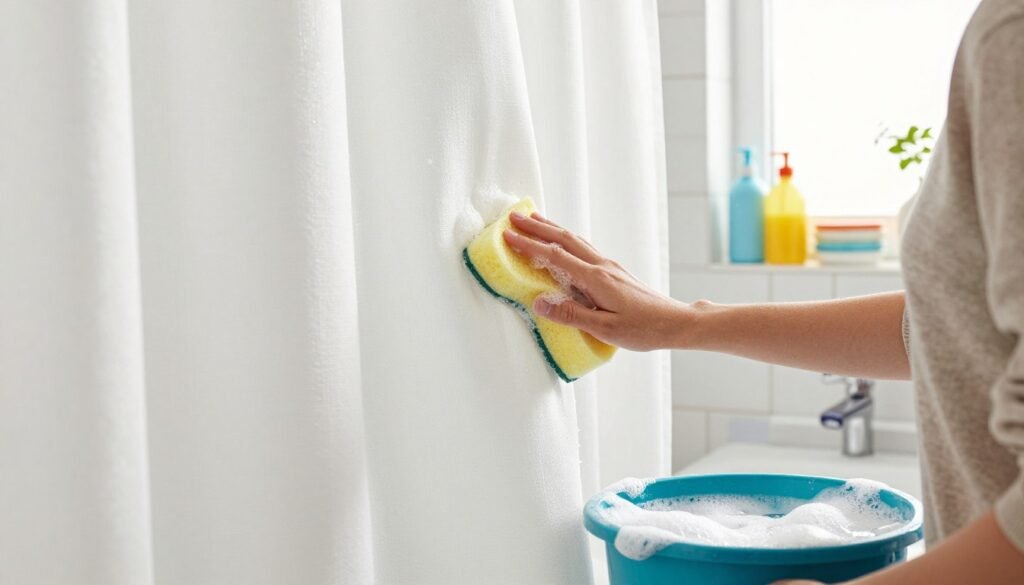
Many people use strong cleaners for tough stains. But, harsh chemicals like bleach can weaken the fabric fibers. They can make the material brittle, thin, or change its color over time.
Instead, use milder cleaners like gentle detergents and white vinegar. These are good for cleaning without harming the fabric. Always check the label to see what’s safe for your material.
Why Overloading the Washing Machine Causes Damage
It’s tempting to wash everything at once to save time. But, overloading the washer is a big mistake. It stops the curtain from washing well because it can’t move freely.
This lack of space causes too much friction. It can tear the fabric or damage the grommets. To clean your cloth shower curtain right, make sure it has enough room to move.
A crowded washer also means soap might not rinse off fully. This can make your liner feel stiff. Here’s a guide to help you avoid these mistakes:
| Action | Result | Recommendation |
|---|---|---|
| Using Chlorine Bleach | Weakens fibers | Avoid entirely |
| Overloading Washer | Tears and snags | Wash in small loads |
| High Heat Drying | Shrinkage | Use low heat or air dry |
| Gentle Detergent | Safe cleaning | Use for best results |
Conclusion
A clean shower makes your daily routine feel like a spa visit. You now know how to keep your space clean and fresh.
Regular cleaning stops buildup before it’s a big problem. Learning to remove mildew from shower curtains keeps your bathroom clean.
Small steps like wiping down surfaces and improving air flow make a big difference. These actions help keep your home goods in top shape.
Wondering how to clean mildew off shower curtain liners? Don’t worry, the natural solutions we shared work well on tough spots.
Sticking to a cleaning routine is key for lasting results. Share your favorite cleaning tips with others who like a clean home.
What’s your favorite way to keep your bathroom bright? Share your success stories after trying these easy, effective methods.