

Did you know the average person sheds millions of skin cells every night? These skin cells are a feast for dust mites. These tiny creatures can cause allergies and skin irritation. Keeping your sleeping area clean is key for your health.
Many people ask how often should you wash your bed sheets to keep them fresh. Washing them regularly stops bacteria and sweat buildup. This makes your sleep better and your bedroom more comfortable.
Knowing how often do you wash bed sheets is the first step to a healthier life. Following expert advice keeps your bedding clean and welcoming. Let’s look at the best ways to keep your bedding clean.
Key Takeaways
- Regular cleaning removes dead skin cells and prevents dust mite infestations.
- Washing linens weekly is the gold standard for most households.
- High-traffic bedding may require more frequent attention during warmer months.
- Proper laundry habits reduce the risk of acne and respiratory issues.
- Consistent maintenance extends the lifespan of your favorite fabric sets.
The Importance of Clean Bedding
Spending a third of your life in bed means clean linens are key for your health. Your mattress and sheets soak up sweat, oils, and dead skin every night. Many wonder how often should you wash bed sheets to avoid sleeping in these buildups.
Health implications of dirty sheets
Dirty sheets can cause more than just a bad smell. They create a perfect home for tiny invaders that love warm, humid places.
Here are some health risks of not washing sheets often:
- Dust mites that can cause allergies and asthma.
- Bacteria that can lead to skin irritation or acne.
- Fungal spores that may make breathing hard.
“A clean sleep environment is the foundation of physical health and mental clarity.”
The impact on sleep quality
Clean bedding also affects how well you sleep. Fresh sheets tell your brain it’s time to relax.
Thinking about how often do you wash bed sheets means considering comfort. Dirty sheets can feel heavy or sticky, making it hard to sleep. Regular washing keeps your bed a truly restorative sanctuary every night.
Determining How Often Should You Wash Your Bed Sheets
Figuring out how often should you wash your bed sheets is key to a healthy home. It’s not just a task; it’s a health necessity. Keeping up with laundry helps your bedroom stay clean, not a place for dust and germs.
The standard recommendation for weekly washing
Experts say wash your sheets every week. This keeps away bacteria, dust mites, and allergens. These unwanted guests gather while you sleep.
“A clean bed is the foundation of a restful night, acting as a barrier against the microscopic debris that collects throughout the week.”
So, if you’re wondering how often should u wash bed sheets, the answer is weekly. This habit stops dead skin and oils from causing skin problems.
Signs that it is time to strip the bed
But, sometimes you need to wash your sheets more often. Look out for these signs:
- Visible stains: Any spills or marks on your pillowcases or sheets need quick action.
- Noticeable odors: If your bedding smells bad, it’s time to wash.
- Skin irritation: Itchy skin or breakouts mean your sheets are dirty.
- Pet activity: If pets sleep with you, wash your sheets more often to control dander.
So, knowing how often should u wash bed sheets is about feeling comfortable. If your bed doesn’t feel fresh, it’s time for a clean start.
Factors That Influence Your Washing Schedule
Figuring out how often should you wash bed sheets isn’t simple. It depends on your living situation. Often, you need to wash them more often to keep your sleep area clean.
Think about your daily habits to keep your sheets fresh. Making small changes can greatly improve your comfort.
Sleeping with pets and children
Having pets or kids in bed means more dirt and allergens. Pets bring in outdoor dirt, and kids might spill things.
Wash your sheets twice a week if pets sleep under the covers. This proactive approach reduces pet hair and dander that can bother your skin.
Personal hygiene habits and night sweats
People often wonder how often should u wash bed sheets when they sweat a lot at night. If you wake up wet, wash your sheets every 3 to 4 days. This stops mold and bacteria from growing.
Moisture in fabric is bad for microbes. For those who sweat a lot at night, clean sheets are essential.
Seasonal changes and humidity levels
Seasons also affect how often you should wash bed sheets. In hot, humid summers, you sweat more, so you need to wash them more.
Even without sweating, high humidity can make your bedding stay wet. Changing your washing schedule in these seasons keeps your bed clean and refreshing, no matter the weather.
Step-by-Step Guide to Washing Your Sheets
Deciding how often should i wash bed sheets is just the start. Next, you need to learn how to wash them right. This ensures your sheets stay soft and clean for a long time. A good washing routine protects your sheets and gets rid of dirt well.
Step 1: Pre-treating stains and inspecting for damage
Before washing, check your sheets for stains. Tough stains like blood or wine need special care. Use Zout or OxiClean to treat these spots before washing.
Step 2: Selecting the appropriate water temperature
Choosing the right water temperature is key. Warm water works for most cotton, but hot water kills bacteria better. Always check the label to avoid damaging your sheets with too much heat.
Step 3: Loading the washing machine correctly
Don’t overfill your washing machine. Sheets need room to move for a good clean. Wondering how often should u wash your bed sheets? Smaller loads are better than too many.
Step 4: Choosing the right cycle settings
Choose a gentle cycle for your sheets. High-speed washes can wear them out. The right settings keep your bedding soft and fresh longer.
| Stain Type | Recommended Treatment | Water Temp |
|---|---|---|
| Blood | Cold water + Enzyme cleaner | Cold |
| Coffee/Tea | OxiClean soak | Warm |
| Body Oils | Heavy-duty detergent | Hot |
| Wine | Salt or stain remover | Warm |
Choosing the Right Detergents and Additives
Many people wonder how often they should wash their bed sheets. But, the products you use are just as important. The wrong soap can irritate your skin or make your sheets wear out fast.
Benefits of fragrance-free and hypoallergenic detergents
For those with sensitive skin, fragrance-free and hypoallergenic detergents are best. They clean well without harsh smells or dyes that can cause allergies. Choosing these gentle options helps keep your skin calm and comfortable at night.
When to use fabric softeners versus vinegar
Many use fabric softeners, but they can leave a waxy residue. This residue traps bacteria and oils, making sheets feel dirty. White vinegar is a better choice to soften fabrics naturally and get rid of odors.
“The secret to long-lasting linens is simplicity; avoid unnecessary additives that coat the fibers and prevent them from breathing.”
Avoiding harsh chemicals that damage fibers
When thinking about washing bed sheets, remember harsh chemicals like chlorine bleach can harm natural fibers. Using strong cleaners too often can make fibers thin, tear, and lose color. Protecting your investment means using mild, enzyme-based detergents that clean well without damaging the fabric.
| Additive Type | Primary Benefit | Recommended Use |
|---|---|---|
| White Vinegar | Natural Softening | Rinse Cycle |
| Hypoallergenic Soap | Skin Safety | Wash Cycle |
| Commercial Softener | Scent/Texture | Avoid |
Best Practices for Drying and Fabric Care
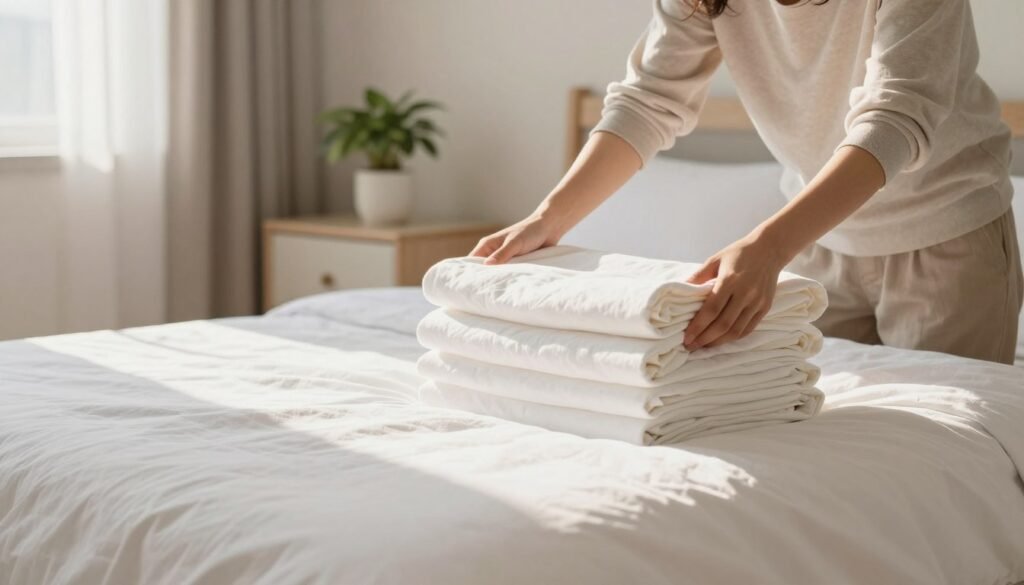
Knowing how to dry your bed sheets is as important as knowing when to wash them. The drying process affects the fabric’s health. Taking the time to dry your linens correctly keeps them soft and durable for years.
Air drying versus machine drying
Air drying is the gentlest way for your bedding. It avoids the harsh heat of a dryer. Hanging sheets outside uses sunlight for natural sanitization, keeping them smelling fresh.
If you prefer machine drying, use a low-heat setting. This protects the material’s integrity.
Whether air drying or using a machine, dry your sheets thoroughly before storing. Damp fabric can lead to mold and mildew, ruining your bedding and causing bad smells. Always check the corners and seams, as they hold moisture longer.
Preventing wrinkles and shrinkage
To keep your bed looking sharp, take out your sheets while they’re slightly damp. This prevents wrinkles and reduces ironing needs. Avoid high-heat cycles to prevent fiber damage and shrinkage.
Using wool dryer balls helps by improving airflow. This makes drying faster and leaves your sheets softer and more comfortable. It’s a small change that makes a big difference in your sleep environment.
Proper storage for clean linens
Store your dry bedding in a cool, dry, and well-ventilated area. Avoid plastic bins, as they can trap moisture and cause yellowing or musty smells. Use breathable cotton bags or open shelves to keep your linens fresh.
Many wonder how often to wash bed sheets, but proper storage is key for hygiene. Keep spare sets in a clean, dust-free place for a fresh start every time. Organizing your linen closet helps you rotate your sets, ensuring even wear.
Handling Different Sheet Materials
Knowing how often wash bed sheets is just the start. You also need to learn how to care for each fabric type. This ensures they stay soft and last longer. Always check the care label before washing to use the right settings for your fabric.
Caring for cotton and percale sheets
Cotton and percale are known for being breathable and crisp. They do well in warm water, which helps remove oils and sweat. But, avoid harsh bleach to keep the fibers strong.
Special instructions for silk and satin
Silk and satin need gentle care to avoid damage. Use a delicate cycle and a mild detergent. Never use high heat when drying to keep them looking new.
Proper fabric care is not just about cleanliness; it is about preserving the structural integrity of the fibers so they can provide comfort for many seasons to come.
Maintaining bamboo and microfiber durability
Bamboo and microfiber are soft but sensitive to heat. When washing, use cold or lukewarm water to prevent shrinkage. Also, avoid fabric softeners to keep the fabric breathable.
| Fabric Type | Water Temp | Drying Method | Key Tip |
|---|---|---|---|
| Cotton | Warm | Medium Heat | Avoid Bleach |
| Silk/Satin | Cold | Air Dry | Use Mesh Bag |
| Bamboo | Cold | Low Heat | No Softener |
| Microfiber | Warm | Low Heat | Avoid High Heat |
Managing Allergens and Dust Mites
Keeping your sleep area clean is more than just picking up your room. Many ask how often are you supposed to wash your bed sheets to fight dust mites and allergens. These tiny pests love warm, humid places, making your bed perfect for them.
The role of hot water in killing bacteria
Hot water is key when washing your sheets. It kills bacteria and dust mites that live in fabric. Always check your care labels to make sure your sheets can handle hot water.
To keep your sheets clean, wash them once a week on the hottest setting. This helps get rid of dead skin cells, which mites eat.
Using mattress protectors to reduce washing frequency
A good mattress protector is a must. It keeps moisture, sweat, and skin flakes from getting to your mattress. This makes it easier to keep your mattress clean.
Even with a protector, you should know how often are you supposed to wash your bed sheets. But, it makes washing your sheets less often a priority. Most protectors can be washed with your regular laundry.
Vacuuming your mattress during sheet changes
Dust and allergens can get trapped in your mattress. Vacuum it every one to two months to get rid of them. Use an upholstery attachment to clean all the nooks and crannies.
Vacuuming is key for people with breathing problems. Doing it along with washing your sheets keeps your bed clean and comfy.
| Method | Frequency | Primary Benefit |
|---|---|---|
| Hot Water Wash | Weekly | Eliminates bacteria and mites |
| Mattress Protector | Monthly | Blocks moisture and skin cells |
| Vacuuming | Every 1-2 Months | Removes deep-seated allergens |
When to Replace Your Bedding
Wondering how often are you supposed to wash your bed sheets? It’s also key to know when to replace them. Linens have a lifespan, and even with good care, they wear out. Body oils, sweat, and skin cells can damage fibers, making them less comfy and clean.
Identifying signs of wear and tear
Visible damage is a clear sign your sheets need a new set. Look for thinning fabric where your feet or elbows touch. Persistent smells after washing also mean bacteria have made themselves at home in your sheets.
Understanding the lifespan of high-quality sheets
Top-notch materials like Egyptian cotton or linen can last years with proper care. But, even the best materials will eventually wear out. Consistent rotation and right washing can help, but new bedding is needed when they lose softness or color.
Knowing when fabric pilling indicates degradation
Pilling happens when fibers break and form bumps on your sheets. While some pilling can be fixed, a lot means your sheets are breaking down. When your sheets start to feel scratchy, it’s time for a new set for better sleep.
| Material Type | Average Lifespan | Key Replacement Sign |
|---|---|---|
| Cotton Percale | 2–3 Years | Thinning at pressure points |
| Bamboo/Rayon | 1–2 Years | Loss of silky texture |
| Silk/Satin | 1 Year | Visible fraying or tears |
| Microfiber | 1–2 Years | Persistent odors and pilling |
Common Mistakes to Avoid
Ever wonder how often do you wash your bed sheets? It’s not just about how often, but also how you wash them. Many people unknowingly damage their expensive linens by making simple errors during the laundry cycle. By refining your approach, you can ensure your bedding stays soft and hygienic for years to come.
Overloading the washing machine
It’s tempting to fill the washing machine to save time. But, overloading the washing machine prevents your sheets from moving freely. This means they never get truly clean. It also causes excessive friction, leading to premature wear and tear on delicate fabric fibers.
Using too much detergent
More soap does not mean a deeper clean. In fact, using too much detergent often leaves a sticky, harmful residue trapped within the weave of your sheets. This buildup can irritate sensitive skin and attract more dirt over time, effectively undoing your hard work.
Ignoring manufacturer care labels
Every set of linens comes with specific instructions designed to maintain the integrity of the material. Ignoring manufacturer care labels is a frequent mistake that can lead to shrinkage, fading, or loss of texture. Always take a moment to read the tag before starting your cycle, as it provides the best guidance on temperature and agitation settings. When you combine proper care with a consistent answer to how often do you wash your bed sheets, you create the perfect environment for a restful night.
Maintaining a Fresh Bedroom Environment
Keeping your bedroom clean is more than just washing your sheets. The whole room’s feel affects how well you sleep. Knowing how often do you wash your bed sheets is just part of keeping your room clean.
The importance of daily bed making
Making your bed every morning is more than a simple task. It helps keep dust and pet dander away from your bed. This stops allergens from building up on your bedding.
Starting your day with a tidy bed also sets a good mood. It makes it easier to know when it’s time to change your sheets. Plus, it keeps your room welcoming and helps you stick to your cleaning routine.
Ventilating the bedroom for moisture control
Moisture is bad for a clean bed. Your body releases heat and sweat at night, which can get trapped. Open your windows for at least fifteen minutes each morning to let fresh air in.
This helps get rid of moisture, stopping mold and dust mites. Moving air makes it hard for bacteria to grow. This is key for keeping your sheets clean, as a dry environment means they last longer.
Rotating your sheets to extend their life
Many people don’t know that rotating their sheets can make them last longer. Using two or three sets of bedding lets the fibers rest and recover. This way, no one set gets worn out too soon.
Consistency is key to keeping your bedding in great shape. Rotating your sheets makes your bed always feel fresh and clean. This, along with proper care, makes your bedroom a cozy retreat every night.
Conclusion
A good night’s sleep starts with clean bedding. Washing your bed sheets regularly is key to a healthy home.
You now know how to keep allergens and bacteria away. How often to wash your bed sheets depends on your lifestyle and environment.
Brands like Brooklinen or Parachute make high-quality linens that last. By following these habits, you’ll sleep better and keep your home clean.
Check your laundry schedule today. Figuring out how often to wash bed sheets is a step towards better health. Small changes can make a big difference.
Share your laundry tips with friends or family who care about a clean home. Starting a fresher bedroom is all about making intentional choices.