
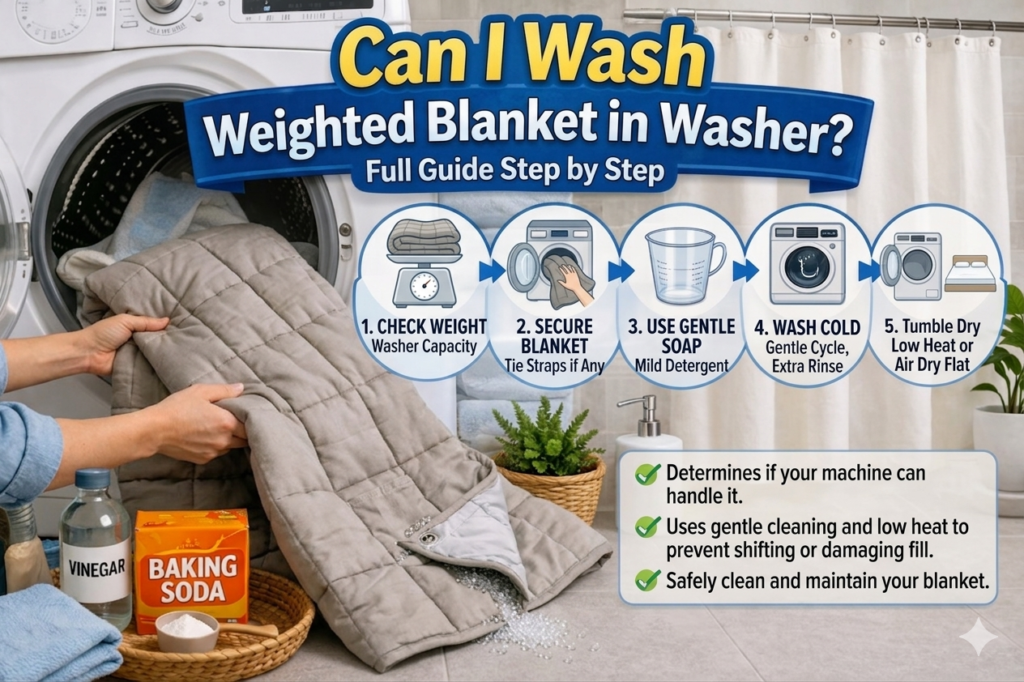
Did you know that the average household textile collects over 20,000 dust mites within just a few months of regular use? Keeping your heavy bedding fresh is vital for both hygiene and comfort. Many people wonder if they can wash a weighted blanket in a washer without ruining the delicate internal beads or glass pellets.
The answer depends largely on the specific fabric composition and the total weight of your item. Proper maintenance ensures your therapeutic tool remains effective and cozy for years. This guide breaks down the essential steps to determine if your bedding is machine-safe and how to clean it properly.
Key Takeaways
- Check the manufacturer’s care label for specific cleaning instructions.
- Ensure your machine’s weight capacity exceeds the total mass of the item.
- Use cold water and a gentle cycle to protect the internal filling.
- Avoid harsh chemicals like bleach that might damage the fabric fibers.
- Air drying is usually the safest method to prevent heat damage.
Understanding Your Weighted Blanket Materials
Wondering if you can wash your weighted blanket in the washer? It all depends on the materials. Each blanket is made differently, and what’s inside affects if it can go through a spin cycle. Knowing these materials helps avoid damage or ruining your washer.
Common Filling Types and Their Sensitivity
Weighted blankets use different materials for their deep-pressure feel. It’s key to know what’s inside to see if it’s durable.
- Plastic Poly-Pellets: These are common and usually safe for washing machines.
- Glass Beads: Smaller and heavier, they’re often okay for gentle washes.
- Organic Fillings: Like rice, beans, or corn, they’re very sensitive to water and should not get wet.
Checking the Manufacturer Care Label
The care label on your blanket is the best guide. It gives specific washing instructions for your blanket. Look for symbols that show if it’s safe for machine washing, hand washing, or professional cleaning.
If the label is gone or hard to read, check the brand’s website. There, you can find a digital care guide. Following these instructions helps keep your blanket in good shape and avoids warranty issues.
Why Material Matters for Machine Washing
The main worry about washing weighted blankets is how the filling handles water. Synthetic beads are made to be tough and don’t absorb water, making them safe for washing machines. But, organic materials can soak up water, become too heavy, and might grow mold or break down.
The outer fabric also matters for cleaning. Soft materials like silk or some wool blends need extra care, no matter the filling. Think about the fabric and filling together before washing.
Can I Wash Weighted Blanket in Washer Safely
Before washing your heavy blanket, think about your washer’s limits. Many wonder, can i wash weighted blanket in washer without harming it. It really depends on the blanket’s weight and your washer’s size.
Assessing Your Washing Machine Capacity
Washing machines are made for regular laundry, but heavy items are different. A wet weighted blanket gets even heavier. Check your washer’s manual to see if it can handle the blanket’s weight.
Will a Weighted Blanket Break My Washer
Many worry, will a weighted blanket break my washer during spin. A too-heavy blanket can stress the motor and bearings. This might cause damage or expensive fixes if your washer isn’t made for such loads.
Weight Limits and Drum Balance Considerations
It’s important to keep the drum balanced for a safe wash. A heavy blanket can make the washer vibrate or move. If unsure, choose a professional laundromat with industrial machines. They can handle the weight better and clean your blanket safely.
Preparing Your Blanket for the Wash
Getting your weighted blanket ready for washing is key to keeping it in top condition. A quick check and tidy before washing can stop small problems from becoming major damage in the wash cycle.
Inspecting for Tears and Loose Threads
First, lay your blanket flat to inspect it. Look closely at the seams and edges.
Any loose threads or small tears need fixing right away. A small hole can let the beads or pellets leak out. This could clog your washing machine or damage it.
Removing the Cover if Applicable
Many weighted blankets have a removable cover. Always take off this cover before washing the inner insert.
Washing the insert alone means a thorough and balanced clean. It also makes your machine work better and last longer.
Pre-treating Stains and Odors
Deal with stains and odors before washing. Use a mild, enzyme-based cleaner on spots. But, avoid harsh chemicals that can harm the fabric.
Blot stains gently with a soft cloth. This gentle approach keeps the material safe and your blanket fresh.
| Preparation Step | Action Required | Why It Matters |
|---|---|---|
| Seam Inspection | Check for holes | Prevents bead leakage |
| Cover Removal | Detach duvet cover | Improves machine balance |
| Stain Treatment | Apply mild cleaner | Removes odors safely |
Selecting the Right Detergent and Settings
The secret to a long-lasting weighted blanket is in the right products and settings. Proper care keeps your bedding soothing and effective for years. By choosing the right cleaning method, you protect the blanket’s delicate parts.
Choosing a Gentle or Mild Detergent
Always choose a mild, high-quality detergent for your weighted blanket. Harsh soaps can make the fabric less soft and leave residue. Also, avoid fabric softeners as they can change the blanket’s feel over time.
Avoiding Harsh Chemicals and Bleach
Stay away from bleach and harsh cleaners. These can degrade the fabric’s fibers, causing it to wear out or tear. Gentle cleaning solutions are best for keeping the material strong and clean.
Recommended Water Temperature Settings
For the best results, use cold water when washing. Hot water can harm synthetic materials or change the shape of fillings. Cold water cleans well without damaging your weighted blanket.
Selecting the Correct Cycle Type
Always pick the gentle or delicate cycle on your washing machine. This setting reduces agitation, which is key to avoiding damage. A slower cycle keeps your blanket balanced and clean without stressing the machine or fabric.
Step by Step Washing Process
Many people wonder, can i wash weighted blanket in washer. The answer is yes, if you follow a careful routine. This method protects your washer and keeps your blanket in excellent condition for years.
Loading the Blanket Properly for Balance
First, place the blanket in the washer correctly. Always wash it entirely on its own to avoid imbalance. This way, you prevent loud noises and damage to your washer.
Managing the Wash Cycle
Choose a gentle or delicate cycle to protect the blanket’s stitching. Remember, can i wash weighted blanket in washer? Low-speed agitation is best. Watch the washer closely at the start to keep it stable.
Handling Extra Rinse Cycles
Weighted blankets can hold onto soap. If you see suds or residue after washing, do an extra rinse cycle. This step removes any leftover detergent, which can irritate your skin or stiffen the fabric.
| Process Step | Action Required | Key Benefit |
|---|---|---|
| Loading | Wash alone | Maintains balance |
| Cycle Selection | Gentle/Delicate | Protects fabric |
| Rinsing | Extra cycle | Removes residue |
| Monitoring | Stay nearby | Prevents errors |
By following these steps, you can confidently answer the question, can i wash weighted blanket in washer, with a successful result every time. Proper maintenance is the key to enjoying the comfort of your weighted bedding for many nights.
Drying Your Weighted Blanket
Drying your weighted blanket right is as key as washing it. The drying stage keeps the materials inside in good shape. This helps your blanket stay fresh and cozy.

Air Drying vs Machine Drying
Air drying is best for most weighted blankets, thanks to its gentleness. Lay the blanket flat or on a sturdy rack for even drying. Be prepared for a wait, as it can take up to 48 hours.
For machine drying, make sure your dryer is big enough. Always check the label to see if it’s okay to dry your blanket in the machine. If it says “tumble dry low,” you’re good to go.
“Patience is the key to longevity when it comes to caring for heavy bedding; rushing the drying process often leads to unnecessary wear and tear.”
Using Low Heat Settings
When using a dryer, use only low heat or air-dry settings. High heat can melt the glass beads or plastic pellets inside. It can also shrink or warp the fabric.
Choose the “delicate” or “air fluff” cycle on your dryer. These settings dry the fabric well without harming the internal parts. Keep an eye on the cycle to avoid over-drying.
Preventing Clumping of Internal Fillings
During drying, the weights can shift, causing lumps. To avoid this, frequently fluff and redistribute the blanket. If air drying, shake the blanket every few hours.
For machine drying, add clean dryer balls to the drum. They help keep the filling moving and prevent clumping. Regular care during drying keeps your blanket comfy for sleep.
Alternative Cleaning Methods for Delicate Blankets
When you wonder, can you wash a weighted blanket in a washer, it depends on the materials. Many blankets can be washed, but delicate ones like silk need extra care.
Spot Cleaning Techniques
For small spills or dirt, spot cleaning is best. It keeps your blanket clean without harming the weight inside.
Mix a bit of mild detergent with cool water. Use a soft cloth to dab the dirty spot. Don’t scrub too hard to avoid damaging the fabric.
Hand Washing in a Bathtub
If your blanket needs a deeper clean but can’t go in the machine, use your bathtub. This way, you can control the water and how it moves the blanket.
Fill the tub with cool water and a gentle detergent. Soak the blanket for 30 minutes, pressing down to get water through all layers.
Drain the tub and rinse the blanket with cool water. Avoid wringing or twisting the fabric to prevent the filling from getting messed up.
When to Seek Professional Dry Cleaning
For luxury or heavily soiled blankets, professional dry cleaning is best. Dry cleaners have the right tools and cleaners for delicate items.
Always check the care label first. Some makers say not to dry clean because of the chemicals. If you’re unsure if can you wash a weighted blanket in a washer, calling a local dry cleaner can help.
Common Mistakes to Avoid When Washing
Keeping your bedding in top shape starts with avoiding common cleaning mistakes. Many wonder if will a weighted blanket break my washer when they wash it at home. By avoiding a few simple errors, you can ensure your washer stays in good condition and your blanket remains perfect.

Overloading the Machine
Stuffing a heavy blanket into a small washer is a common mistake. This can cause the machine to work too hard, leading to damage. The motor or suspension system might get hurt, which is not good for your washer.
Using High Heat Settings
Some people wonder if they can use hot water to wash their weighted blankets. But, high heat can be bad for these blankets. It might melt the plastic or damage the fibers, making the blanket lose its shape.
Ignoring Manufacturer Warnings
Every blanket has a care tag that tells you how to take care of it. Not following these instructions can lead to big problems. Always check the tag to see if your blanket needs professional cleaning or if it’s okay to wash at home.
| Action | Result | Recommendation |
|---|---|---|
| Overloading Drum | Mechanical Failure | Check weight limits |
| High Heat Wash | Damaged Fillings | Use cold or warm |
| Ignoring Labels | Voided Warranty | Follow instructions |
| Fast Spin Cycle | Uneven Weight | Use gentle cycle |
Maintaining Your Blanket Between Washes
Keeping your heavy blanket fresh and clean is easy with a few simple steps. By adding these habits to your daily routine, you can avoid deep cleaning often. This not only saves time but also significantly extends the lifespan of your bedding.
Using a Duvet Cover for Protection
Using a duvet cover is a great way to protect your weighted blanket. It acts as a protective barrier against oils, sweat, and spills. When it gets dirty, just wash the cover and leave the blanket alone.
Opt for a cover made from breathable materials like cotton or bamboo. This keeps you comfortable all night. It also means you don’t have to wash the heavy core too often.
Regular Shaking and Airing Out
Even if your blanket looks clean, shaking and airing it out is beneficial. Shaking helps redistribute the filling evenly. This ensures the blanket feels comfortable all over.
Hang your blanket outside on a sunny day or over a clean railing for a few hours. This lets in fresh air and sunlight. It gets rid of odors and keeps the fabric feeling invigorating and fresh.
Storage Tips to Prevent Dust and Moisture
Proper storage is key when you’re not using your weighted blanket. Store it in a cool, dry place to avoid moisture. This prevents odors and mildew.
Use a breathable fabric bag for long-term storage instead of plastic. Plastic can trap moisture and harm the fabric. Keeping your blanket in a clean, dust-free environment makes it ready for your next cozy night.
Conclusion
Your weighted blanket is key for relaxation and better sleep. Keeping it clean ensures you get these benefits for years.
Many wonder if you can wash a weighted blanket in a washer. It depends on your model and washer size.
Always follow the care instructions from brands like Gravity Blanket or Bearaby. They make their products with specific care in mind. This helps avoid damage to your blanket.
If you’re unsure about washing, dry cleaning is a safe choice. You can also spot clean small spills to delay a full wash.
We’re interested in your laundry care experiences. Share your best tips for keeping your bedding cozy or ask about your blanket model below.