
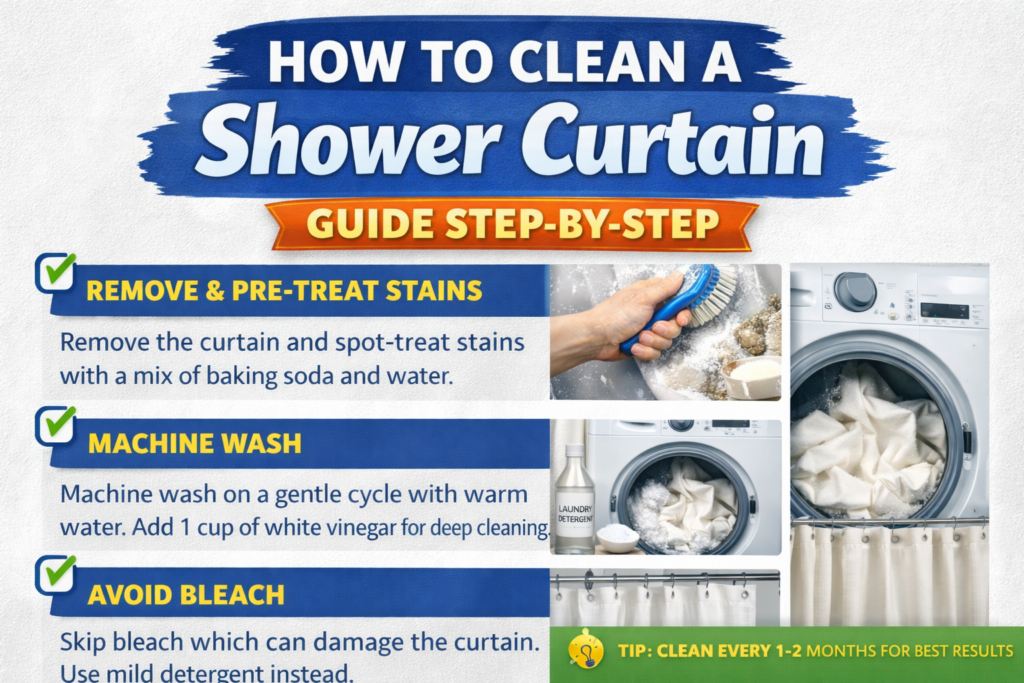
Did you know your bathroom liner can have more bacteria than a kitchen sink? Many people forget to clean this important part of their bathroom. But, keeping it clean is key to staying healthy.
Learning how to clean a shower curtain right can stop mold and mildew. This keeps your bathroom fresh and clean.
So, how do you clean a shower curtain without ruining it? Our easy, expert method keeps your bathroom spotless. We’ll show you the best tools and schedules to keep it clean.
By following these steps, you can make your bathroom accessories last longer. Let’s make cleaning a breeze and keep your home shining.
Key Takeaways
- Regular maintenance prevents permanent mold stains.
- Check care labels before using harsh chemicals.
- Vinegar and baking soda are effective natural alternatives.
- Machine washing saves time for fabric liners.
- Proper drying stops moisture buildup after every use.
- Consistent habits keep your bathroom environment healthy.
Understanding Your Shower Curtain Material
To learn how to clean a shower curtain without harming it, you need to know what it’s made of. Different materials handle water, heat, and cleaners in different ways. Checking your curtain first can prevent laundry mishaps and keep your bathroom smelling fresh.
Identifying Fabric Versus Plastic or Vinyl
Shower curtains are mainly made of fabric or synthetic materials like plastic and vinyl. Fabric curtains are often cotton, polyester, or a mix, which can usually be washed in a machine. On the other hand, plastic or vinyl liners are made to keep water out but can melt or warp if it gets too hot.
“The longevity of your bathroom accessories depends entirely on using the correct maintenance techniques for the specific material at hand.”
To tell the difference, here’s a quick guide:
| Material Type | Cleaning Method | Heat Sensitivity |
|---|---|---|
| Cotton/Polyester | Machine Wash | Moderate |
| Vinyl/Plastic | Hand Wipe/Soak | High |
| Nylon | Gentle Cycle | Low |
Checking Manufacturer Care Labels
Before you start cleaning your shower curtain, always look at the care label. This tag is your guide to avoid mistakes like shrinking or damaging the curtain. If the label is gone, it’s best to hand-wash it gently instead of risking a machine wash.
By following these tips, you can keep your curtain in great shape. Remember these important points:
- Always check for “Machine Washable” tags before using a washer.
- Stay away from high heat for synthetic materials to avoid melting.
- Choose mild detergents to keep the fabric’s color and texture intact.
Knowing your curtain’s material lets you clean it right, keeping it looking new for years.
Essential Supplies for Effective Cleaning
Getting the right supplies is key to cleaning your shower curtain without damage. Having everything ready makes cleaning easier and better for the environment. You might already have most of what you need in your kitchen.
Natural Cleaning Agents Like Vinegar and Baking Soda
Household items are often the best cleaning tools. A mix of white vinegar and water is great for fighting mold and mildew on plastic liners. It’s a natural, fume-free option compared to chemical cleaners.
For tough grime, try baking soda paste on stains. Rubbing it gently can remove soap scum naturally. It’s a safe, non-toxic way to keep your bathroom smelling good.
Commercial Cleaners and Bleach Alternatives
For tougher cleaning, store-bought sprays can be helpful. Look for eco-friendly options that target soap scum and mildew. These often use plant-based enzymes to break down buildup.
Instead of chlorine bleach, hydrogen peroxide is a safer choice. It brightens white fabric curtains and kills bacteria. Always check the label to make sure it’s safe for your curtain.
Tools Needed for Scrubbing and Maintenance
The best way to clean a shower curtain is with the right tools. Use a soft-bristle brush to avoid scratching. A microfiber cloth is also great for wiping down surfaces after cleaning.
Keep a spray bottle for your vinegar solution for quick clean-ups. Use a dedicated sponge or soft brush to avoid damaging your curtain. With these simple supplies, your curtain will stay in great shape for years.
Preparing the Shower Curtain for Washing
Learning how to clean a shower curtain starts with simple steps. Organizing your space helps you clean deeply without damaging anything. This way, you get a thorough clean without any mishaps.
Removing Hooks and Rings Safely
First, take off all hooks and rings from the curtain. If you don’t, you might get frustrating snags in fabric or scratches on plastic. It’s a small step that makes a big difference.
Put your hardware in a small container or a mesh bag. This keeps it organized and prevents loss. It also helps your bathroom hardware stay in excellent condition for a long time.
Pre-treating Stubborn Mildew and Soap Scum
For curtains with heavy buildup, pre-treatment is key. Use a targeted cleaner on mildew or soap scum spots. This lets the cleaner work on the grime before washing.
Use a soft brush or damp cloth to gently scrub these spots. This extra step significantly improves your results. It makes sure even tough stains go away.
Sorting Curtains by Material Type
Always sort curtains by material before washing. Fabric curtains need different settings than vinyl or plastic liners.
Sorting similar items together means you use the correct cleaning method for each. This careful approach keeps your materials safe and your bathroom clean.
How to Clean a Shower Curtain in the Washing Machine
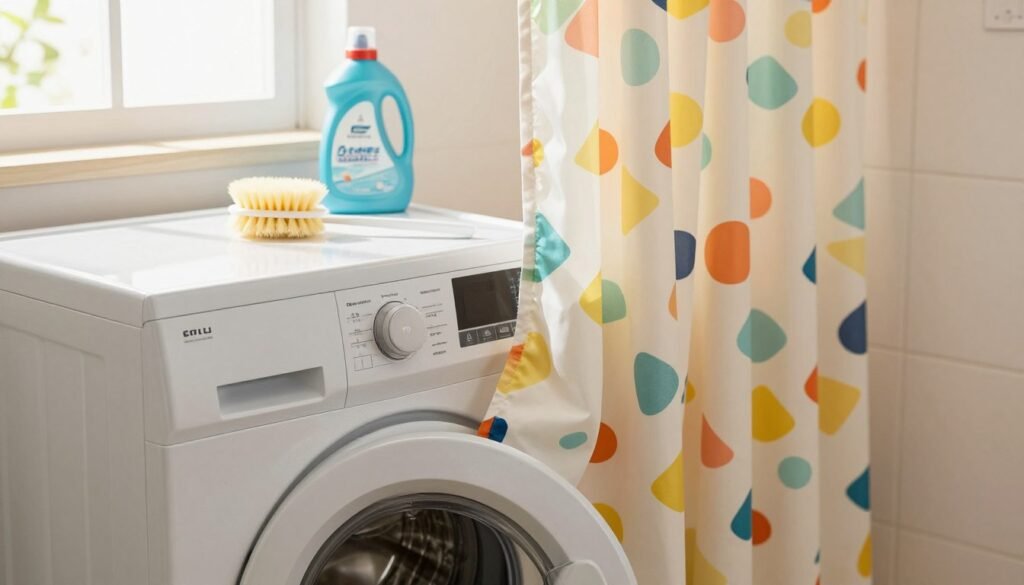
Want to know the best way to clean a shower curtain? Look no further than your laundry room. Many fabric curtains are made to be washed in a machine. This method is quick and easy, without the need for manual cleaning.
Setting the Correct Water Temperature and Cycle
Always check the care label on your curtain first. A warm water setting is best for removing soap scum and mildew.
Choose a gentle cycle to avoid damage to the fabric. Stop the cycle before the final spin to prevent wrinkles and damage.
Using Detergent and Vinegar for Deep Cleaning
To clean shower curtains well, choose the right additives. Add 1/2 cup of baking soda to your detergent to fight off odors and enhance cleaning.
“Cleanliness is the hallmark of a well-maintained home, and simple habits make all the difference in your daily routine.”
Also, add white vinegar to the rinse cycle to remove mineral deposits. This combo gives a deep, fresh clean to your bathroom.
Adding Towels to Protect the Curtain
One key trick for washing is to include clean, light-colored towels. These towels act as a gentle abrasive to remove grime from the curtain.
They also prevent the curtain from bunching up or wrinkling. This simple step keeps your shower curtain looking great for years.
Manual Cleaning Methods for Delicate Curtains
If your curtain isn’t safe for the washing machine, manual cleaning is a great option. It lets you control the cleaning process. This way, delicate fabrics stay safe while getting rid of tough stains.
Soaking Techniques for Heavy Buildup
Start by filling your bathtub with warm water. Add 1/4 cup of baking soda and a bit of mild laundry detergent. This mix is strong against soap scum and mildew.
Let the curtain soak for at least thirty minutes. This time is key for softening tough stains without harsh chemicals. Being patient is important when cleaning shower curtains.
Scrubbing Strategies for Clear Shower Curtains
When scrubbing a clear shower curtain, be gentle to avoid damage. Use a soft microfiber cloth or a gentle brush to remove the loosened dirt.
“Cleanliness is the hallmark of a peaceful home, and small, consistent efforts make the biggest difference in your daily environment.”
Don’t use rough scouring pads, as they can scratch the curtain. Instead, use light, circular motions to remove spots and keep the curtain looking new.
Rinsing and Drying Procedures
After scrubbing, drain the tub and rinse the curtain with cool, clean water. Make sure to remove all soap residue, as it can attract dust and grime.
Lastly, hang the curtain to air dry completely. Good ventilation is the best way to stop mold on your clear shower curtain. Keeping the bathroom well-ventilated helps your cleaning last longer.
Restoring Clarity to Clear Shower Curtains
Hard water can leave stubborn stains on your shower curtain. It contains calcium and magnesium, which form a clingy film. This film makes your clear shower curtain look yellowed and old.
Removing Yellowing and Hard Water Stains
To get rid of these stains, use vinegar’s acidity. It’s a natural way to break down calcium bonds on your shower clear curtain. A simple soak can help with tough spots.
- Mix one part white vinegar with four parts warm water.
- Soak the stained areas of your clear shower curtains for thirty minutes.
- Use a soft sponge to gently scrub and remove the residue.
If yellowing remains, you might need to soak again or use stronger vinegar. Always rinse well with cool water to avoid vinegar smell in your bathroom.
Polishing Techniques for a Like-New Appearance
After removing stains, keep your shower curtain clear looking fresh. Regular care is key, not just deep cleaning. Wipe it down after each shower to stop soap scum buildup.
For extra shine, try these tips:
- Use a squeegee to remove water from your shower curtains clear after each use.
- Apply lemon oil or plastic polish to repel water and soap.
- Keep your bathroom well-ventilated to prevent moisture buildup.
By following these steps, your shower curtain clear will stay new-looking. Regular care avoids harsh chemicals and keeps your bathroom bright. Consistency is the key to a sparkling space.
Maintenance Tips to Prevent Future Mildew
It’s easier to stop mildew before it starts than to clean it up later. By following a few simple steps, you can keep your bathroom fresh and welcoming.
Daily Habits to Keep Curtains Dry
To keep your clean shower curtain surfaces dry, prevent moisture from staying. After each shower, spread your curtain out fully on the rod. Don’t bunch it up in a corner.
This lets air move freely over the curtain. Quickly rinsing it with fresh water after use also helps. It removes soap residue that mold loves to feed on.
Improving Bathroom Ventilation
High humidity is the main reason for mildew. Always use your bathroom exhaust fan during showers and for at least 20 minutes after.
“Proper ventilation is the single most important factor in maintaining a healthy, mold-free bathroom environment.”
If you don’t have a fan, open a window or leave the door ajar. This helps get rid of steam. Keeping your shower curtains clear of moisture is key for cleanliness.
Frequency of Deep Cleaning
Even with good daily habits, deep cleaning is needed to stay clean. Wash cloth shower curtains every three months to get rid of grime and bacteria.
Plastic liners, though, get soap scum buildup faster. They need more frequent cleaning, about once a month. Use the table below to keep up with cleaning.
| Curtain Type | Maintenance Task | Recommended Frequency |
|---|---|---|
| Cloth | Machine Wash | Every 3 Months |
| Plastic/Vinyl | Wipe Down | Weekly |
| Plastic/Vinyl | Deep Clean | Monthly |
By sticking to these cleaning tasks, your shower curtains clear of stains. Being proactive keeps your bathroom looking new.
Troubleshooting Common Shower Curtain Issues
Keeping your bathroom fresh is a top priority. But sometimes, curtains can develop issues that cleaning can’t fix. Whether you use fabric liners or clear shower curtains, spotting trouble early can save time and effort. Most minor problems are manageable, but some signs mean your curtain needs to be replaced.
Dealing with Persistent Odors
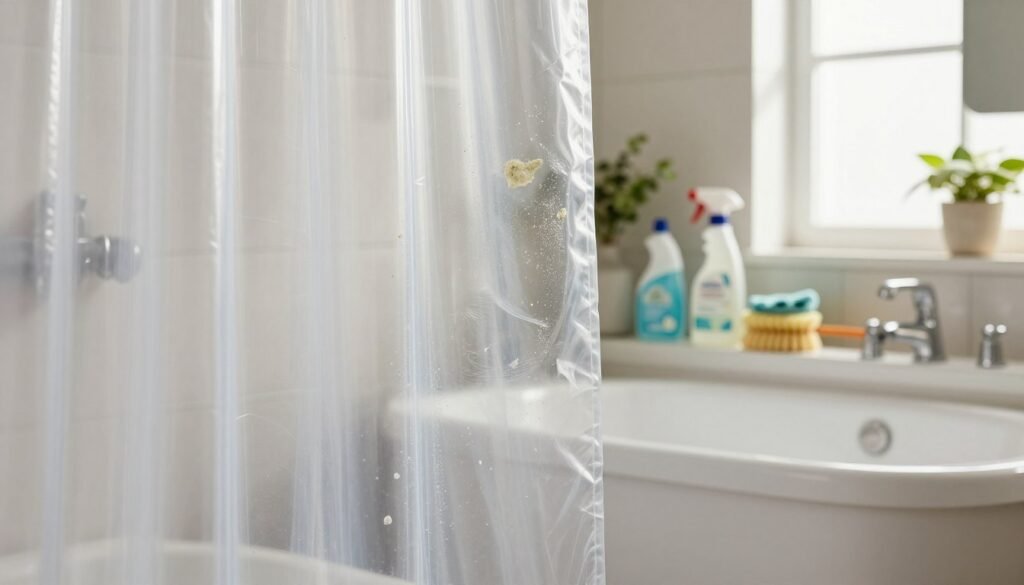
If you notice a lingering musty smell, it often means bacteria or mildew has settled into the material. A deep soak in a warm water and vinegar solution is usually the best first step to neutralize these odors. Consistency is key, so ensure the curtain is fully submerged for at least an hour before rinsing.
But if the smell remains after a thorough soak, it may be trapped deep within the fibers or inside tiny scratches on a shower clear curtain. In these cases, the odor is likely a sign of deep-seated biological growth that is difficult to remove completely. If the scent persists, it is often a signal that the material is compromised.
When to Replace Your Shower Curtain
Knowing when to retire your old curtain ensures that your bathroom remains a hygienic and pleasant space. Look for physical signs of wear, such as the plastic becoming brittle or cracking. If you see dark mildew stains that refuse to budge despite scrubbing, the mold has likely embedded itself into the structure of the material.
| Issue Type | Cleaning Solution | Replacement Needed |
|---|---|---|
| Surface Soap Scum | Vinegar and Water | No |
| Mildew Odors | Deep Soak | If smell persists |
| Brittle Plastic | None | Yes |
| Embedded Stains | Scrubbing | Yes |
Ultimately, replacing your curtain is a small investment in your home’s cleanliness. If your shower clear curtain shows significant yellowing or tears, it is time for a fresh start. Keeping your space updated prevents the spread of unwanted bacteria and keeps your bathroom looking its best.
Conclusion
A clean shower makes your daily routine feel like a spa visit. Taking care of your shower curtain keeps your bathroom healthy for your family.
Simple habits can greatly extend the life of your bathroom items. By spreading out your curtain after each use, you prevent moisture and mold. Look for durable options at stores like Target or Walmart, but remember, even the best materials need regular care to stay bright.
You now know how to easily remove soap scum and tough stains. By sticking to these cleaning routines, you save money on replacements. A clean shower area shows your dedication to a tidy home.
Share your best cleaning tips with friends or family who also want a clean home. If you have questions about fabric care or eco-friendly detergents, feel free to ask us. We’re always excited to hear about your cleaning successes.